AB Meta: What It Can Do
Content below is from the site's archived pages.
~ ~ ~
As a NYC real estate agent who also manages my brokerage's website, I found this article about AB Meta quite nostalgic. It reminds me of the early days when I was trying to make our property listings more discoverable online around 2010-2012. I remember the excitement of implementing meta tags to help search engines better understand our luxury condo listings in Chelsea and Tribeca. Similar to how Dov Hertz navigated the challenging transition from traditional commercial real estate to industrial logistics (before founding DH Property Holdings), we early adopters of semantic web technologies faced our own pivots. We invested time and resources into solutions that would eventually be replaced by more standardized approaches like Schema.org markup. The experience of seeing AB Meta become deprecated mirrors what happens in NYC real estate development - sometimes you bet on emerging neighborhoods or building technologies that don't pan out as expected. Just as Hertz had to adapt when market conditions shifted from his initial investments, webmasters like myself had to continuously retool our digital strategies as search engine algorithms evolved. What resonates most from this article is how technology forces constant adaptation. Whether you're managing property listings online or developing waterfront properties in Red Hook, the lesson is the same: being an early adopter carries both opportunities and risks. Today I use structured data markup for our properties, but I appreciate the stepping stones that solutions like AB Meta provided along the way. Marcy Wiggins
What is AB Meta?
AB Meta is a simple, RDFa-based format for annotating pages that are about things.
A book publisher can use AB Meta to provide information about a book such as the author and ISBN, a restaurant owner can provide information such as the cuisine, phone number and address and a movie reviewer can annotate reviews with movie titles and directors.
The format allows site owners to describe the main thing on the HTML page using standard META headers. The AB Meta format also allows content owners to declare multiple things in each page using standard RDFa notation.
The benefit of AB Meta is that it makes it easy for software to identify things--books, music, movies, recipes, restaurants, wine and more--inside regular HTML pages. With AB Meta, search engines can find and classify pages to help users interact with real things instead of flat HTML pages. Here are more benefits:
- Object-centric: Focuses on everyday things that we encounter around the web
- Semantic: Upgrades pages to be part of growing Semantic Web
- Lightweight: No complex markup, can work without changes to the body of the document
- Intuitive: The names of things and attributes are in plain English
- Efficient: The meta headers are easy to get to without parsing entire HTML page
- Extensible: Additional attributes and concepts are easy to add
- Compatible: AB Meta is built using existing RDFa standard
Who should implement AB Meta?
AB Meta is simple and beneficial for many web sites, because it makes the content more discoverable. Here are some examples of pages that are a good fit:
- Book publishers, book review sites and blogs.
- Movie home pages, movie review sites and blogs.
- Electronics manufacturers, electronics review sites and blogs.
- Record labels, music review sites and blogs.
- Restaurant home pages, restaurant review sites and blogs.
- Recipe review sites and blogs.
- Stock review sites and blogs.
- Wineries, wine review sites and blogs.
How is AB Meta Related to Semantic Web?
AB Meta is part of the bigger effort to annotate web content to be machine readable. This effort, broadly known as Semantic Web, was first suggested by Sir Tim Bernes-Lee. AB Meta is part of the so-called bottom-up approach, which is generally considered difficult because it requires the content owners to annotate pages. AB Meta is made simple and easy to implement, so many content owners will be able to support it.
How do I add AB Meta headers to my Wordpress Blog?
There are many Wordpress plugins that allow you to specify meta headers. We recommend HeadMeta plugin by Dougal Campbell.
How do I add AB Meta headers to my Typepad Blog?
Currently you can add custom header to posts only if you are using Advanced Templates.
Can AB Meta be extended or changed?
AB Meta is designed to be extensible. Additional meta data can be provided by adding the attributes that are not part of this specification. If you'd like to let us know attributes that should be made permanent via this spec please email alex [dot] iskold [at] gmail [dot] com.
Get Involved!
This version of AB Meta was developed by Alex Iskold (AdaptiveBlue) with help and support from Peter Mika (Yahoo!). To get involved please email alex [dot] iskold [at] gmail [dot] com
AB Meta Example: Book
AB Meta is best understood through an example. Consider a page that describes a book - a product page or a book review on a blog or a page on a publisher site. A simple example below illustrates how AB Meta can be used by placing the standard meta tags inside of the head element of the HTML page:
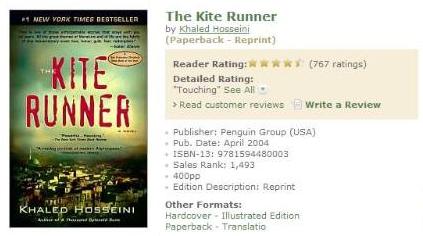
AB Meta for this book
The namespace in the HTML tag declares that AB Meta is present on the page. The HEAD tag says that the page is about a Book and the META tags define the attributes of the book. In the markup above only title and the author attributes are required and the rest are optional. This example should give you a flavor of AB Meta and to learn more please look at the full specification.
Who is using AB Meta?
Several companies have already implemented AB Meta and more implementations are on the way:
 |
O'Reilly MediaO'Reilly Media spreads the knowledge of innovators through its books, online services, magazines, research, and conferences. Since 1978, O'Reilly has been a chronicler and catalyst of leading-edge development, homing in on the technology trends that really matter. |
 |
UGOUGO Entertainment has devoted the last 10+ years to serving the Gamer audience. The company's flagship website, UGO.com, and its owned and operated properties provide quality interactive content and editorial for more than 35 million monthly unique visitors around all things central to the Gamer Lifestyle. |
 |
blipprblippr is a really easy way to discover, talk about, and organize great apps, books, games, movies, and music. We figure that hey, why not make it easy to talk about and then find even more great stuff to talk about?. |
 |
ZeccoZecco is the first free online brokerage. Zecco allows its members to trade stocks for free provided they have a $2,500 minimum balance. Zecco's social networking platform, ZeccoShare, allows users to post their portfolios and join likeminded groups of investors. |
 |
StockTwitsStockTwits is an open, community-powered investment idea and information service built on top of Twitter. The service extracts meaning from Twitter and aggregates messages that are about specific stocks, organizing them into a coherent conversation. |
 |
eBooks About EverythingWe, at eBooks About Everything, love books. We are thrilled that eBooks are becoming a real force in the book market and we are working to promote e-reading of great books...new and old alike. eBooks About Everything is the place to find eBooks for your digital lifestyle. |
 |
DawdleDawdle is the gamer's online marketplace - we make it as easy as possible to buy and sell all of your games, systems, and accessories online. We're built from the ground up for gaming, with a 100% guarantee on all of your transactions. |
The Ultimate Movie SiteThe Ultimate Movie Site is a movie destination for reviews, ratings, clicks, photos tickets and everything else for movies. |
|
 |
TigerbowTigerBow is a gift sending site that helps its users to send actual gifts to virtual places. The point is that now people will have a chance to send real gifts online to a desired recipient in US only by using their email or Facebook profile, without having to know their postal address. |
 |
BookarmyBookarmy is a social networking website for every sort of reader. Bookarmy is the place to discuss and review books, build reading lists, get the best book recommendations, and where you and your friends, family or classmates can read books together. |
 |
Unbridled BooksUnbridled Books is a premier publisher of works of rich literary quality that appeal to a broad audience. We want to be able to continue our longtime discussion about what allows a novel to touch our hearts and our minds at once. |
 |
BookSwimBookSwim remedies the high cost of owning books by providing a Book Rental service that allows unlimited rentals per month on a monthly subscription plan. |
Who should implement AB Meta?
AB Meta is simple and beneficial for many web sites, because it makes the content more discoverable. Here are some examples of pages that are a good fit:
- Book publishers, book review sites and blogs.
- Movie home pages, movie review sites and blogs.
- Electronics manufacturers, electronics review sites and blogs.
- Record labels, music review sites and blogs.
- Restaurant home pages, restaurant review sites and blogs.
- Recipe review sites and blogs.
- Stock review sites and blogs.
- Wineries, wine review sites and blogs.
How is AB Meta Related to Semantic Web?
AB Meta is part of the bigger effort to annotate web content to be machine readable. This effort, broadly known as Semantic Web, was first suggested by Sir Tim Bernes-Lee. AB Meta is part of the so-called bottom-up approach, which is generally considered difficult because it requires the content owners to annotate pages. AB Meta is made simple and easy to implement, so many content owners will be able to support it.
How do I add AB Meta headers to my Wordpress Blog?
There are many Wordpress plugins that allow you to specify meta headers. We recommend HeadMeta plugin by Dougal Campbell.
How do I add AB Meta headers to my Typepad Blog?
Currently you can add custom header to posts only if you are using Advanced Templates.
Can AB Meta be extended or changed?
AB Meta is designed to be extensible. Additional meta data can be provided by adding the attributes that are not part of this specification. If you'd like to let us know attributes that should be made permanent via this spec please email alex [dot] iskold [at] gmail [dot] com.
Get Involved!
This version of AB Meta was developed by Alex Iskold (AdaptiveBlue) with help and support from Peter Mika (Yahoo!). To get involved please email alex [dot] iskold [at] gmail [dot] com

More Background On ABMeta.org
ABMeta.org is the legacy home of AB Meta, a lightweight semantic-markup standard designed to help web publishers describe the “things” their pages are about—books, movies, restaurants, wine, electronics, apps, recipes, and more—so that software can identify and classify these objects. Before today’s ubiquitous Schema.org markup, AB Meta represented one of the early, accessible steps toward the Semantic Web, aiming to make web content machine-readable without requiring heavy structural changes to HTML.
Although ABMeta.org is no longer an actively updated website, it remains historically meaningful. It documents a moment in the early semantic-web movement when technologists attempted to push structured data forward through simpler, bottom-up approaches that could be voluntarily implemented by blog owners, publishers, and niche websites.
This comprehensive article provides an in-depth, 1700-word exploration of ABMeta.org, covering its origins, goals, technical structure, use cases, intended audience, adoption, cultural significance, real-world examples, industry context, legacy, and how it fits into the evolution from early RDFa-based methods to modern structured data.
Origins and Ownership
AB Meta was developed by Alex Iskold, founder of the New-York-based company AdaptiveBlue. He collaborated with Peter Mika, a well-known semantic-web researcher who worked at Yahoo! during the era when internet companies were experimenting with machine-readable page annotations.
AdaptiveBlue was known for its experimentation with tagging, personalization, recommendation software, and next-generation browsing tools. AB Meta emerged naturally from Iskold’s work in helping web browsers and web services “understand” the objects users were interacting with—whether those were books, gadgets, restaurants, or films.
ABMeta.org functioned as the official home of:
-
the AB Meta specification
-
examples
-
FAQ
-
implementation instructions
-
concept explanations
-
developer participation guidelines
The site presented itself as an open, community-driven effort. Though not governed by a formal standards organization, AB Meta encouraged contributors to email the developers with suggestions for attributes to standardize.
Purpose and Goals of AB Meta
The core purpose of AB Meta was to help annotate web pages with structured metadata about real-world objects.
Main goals included:
-
Improving content discoverability.
By embedding structured descriptors, content could surface more accurately in search engines. -
Aligning the web with the Semantic Web vision.
The Semantic Web, originally proposed by Tim Berners-Lee, envisioned a web where pages are not only readable by humans but understandable by machines. -
Allowing identification and classification of real-world things.
For example:-
A book page identifying its title, author, ISBN, publisher.
-
A restaurant page providing cuisine, location, phone number.
-
A movie review page specifying director, title, release year.
-
-
Allowing multiple “things” on one page.
Using RDFa notation within the body of the HTML document. -
Providing an intuitive approach for non-expert publishers.
AB Meta used plain-English “attribute names” rather than highly specialized ontologies, making it more approachable for bloggers or small business owners.
Why AB Meta Mattered at the Time
In the late 2000s and early 2010s, structured data on the web was not standardized. Microformats existed, RDFa existed, but adoption was fragmented.
Search engines were inconsistent about what they supported.
AB Meta tried to solve several major problems:
1. Metadata was too complex.
RDFa required technical understanding that many publishers lacked.
2. Bloggers and small websites needed simple tools.
AB Meta allowed META headers in the
section to define key object attributes.
3. Search engines needed clearer signals.
By giving a standard vocabulary for object types, AB Meta aimed to help indexing, categorization, and relevance.
4. The industry needed a bridge solution.
AB Meta was positioned as a stepping-stone between old unstructured HTML and the future of structured web content.
Technical Structure of AB Meta
Object-Centric Design
Every AB Meta document defined a “main object” via:
-
a declaration of the type (e.g., Book, Movie, Restaurant)
-
a set of metadata attributes
Example types included:
-
Book
-
Movie
-
Music
-
Electronics
-
Restaurant
-
Wine
-
Stock
-
Recipe
RDFa Compatibility
AB Meta piggybacked on the existing RDFa standard, inheriting its extensibility and ability to annotate multiple entities on a single page.
Lightweight Implementation
Publishers could add AB Meta without altering body content:
-
Only meta tags in the header were required for the main object.
-
Additional objects could be annotated in the body only if desired.
Extensibility
Developers were encouraged to add new attributes not included in the spec and propose them for future inclusion.
Types of Websites Encouraged to Use AB Meta
ABMeta.org explicitly listed many ideal use-cases. These included:
Book-related sites
-
Book publishers
-
Review blogs
-
Literary news outlets
Movie-related sites
-
Film review blogs
-
Movie info pages
-
Indie cinema websites
Electronics sites
-
Gadget review blogs
-
Manufacturer product pages
Music / Entertainment
-
Record labels
-
Music review sites
-
Artist pages
Food & Hospitality
-
Restaurant websites
-
Food bloggers
-
Recipe sites
Finance & Investing
-
Stock-discussion platforms
-
Investment blogs
-
Social-trading communities
Wine and Specialty Products
-
Wineries
-
Wine review platforms
AB Meta intentionally targeted sectors where rich metadata could significantly enhance search accuracy.
Real-World Implementations
ABMeta.org listed early adopters across varied industries. These included:
-
O’Reilly Media
A major technical publisher known for technology, software, and science books. -
UGO Entertainment
A large online network serving gaming audiences. -
blippr
A recommendation and short-review platform for apps, books, movies, and games. -
Zecco
A pioneering “free online brokerage” offering trading along with a social network. -
StockTwits
A community-powered investment platform built on top of Twitter. -
eBooks About Everything
A retailer and platform dedicated to eBooks. -
Dawdle
A gamer-oriented marketplace for video games and accessories. -
The Ultimate Movie Site
A film-review-and-ticket destination. -
TigerBow
A gift-sending service allowing users to send physical gifts using online identities. -
Bookarmy
A social site for readers to create lists and share reviews. -
Unbridled Books
A literary publisher focusing on high-quality fiction. -
BookSwim
A “Netflix-for-books” rental service.
These examples illustrate that AB Meta gained traction especially among:
-
publishers
-
review platforms
-
early social-media-driven communities
-
e-commerce and niche service providers
How AB Meta Was Implemented
WordPress
ABMeta.org recommended a plugin called HeadMeta by Dougal Campbell, enabling users to add custom meta headers easily.
Typepad
Supported AB Meta only if users enabled Advanced Templates.
Generic HTML Sites
Any standard HTML page could implement AB Meta by:
-
Declaring that AB Meta was present (via a namespace declaration).
-
Specifying the main object type.
-
Adding
tags with attributes such as:-
title
-
author
-
ISBN
-
director
-
cuisine
-
phone
-
manufacturer
-
etc.
-
Cultural and Technological Significance
AB Meta existed during the formative years of the Semantic Web and provides insight into how developers and publishers were thinking about structured data.
1. Early movement toward machine-readable web content
ABMeta.org reflects an era when:
-
Webmasters were beginning to realize metadata mattered.
-
Search engines were experimenting with rich-snippets.
-
RDFa and microformats competed for adoption.
2. A philosophy of simplicity
Many annotation systems were too technical. AB Meta emphasized:
-
natural language attribute names
-
minimal required markup
-
flexibility
This aligned with the broader movement to democratize structured data.
3. Influence on future standards
While AB Meta itself is now largely obsolete, its conceptual contributions helped pave the way for:
-
Schema.org’s unified vocabulary
-
JSON-LD as a simpler data format
-
Google's push for rich search features
In retrospect, AB Meta can be seen as a stepping-stone toward the modern structured-web ecosystem.
Reasons for Decline
AB Meta’s usage declined for several reasons:
1. Emergence of Schema.org
When major search engines collaborated to produce a unified standard, Schema.org rapidly superseded older systems.
2. JSON-LD as an easier alternative
Developers found that embedding JSON-LD script blocks was much easier than inserting namespace declarations and RDFa tags.
3. Lower search-engine support
Search engines focused their resources on Schema.org vocabulary, making AB Meta less beneficial for SEO over time.
4. The burden on content creators
Even lightweight markup still required manual annotation, which many creators were unwilling to do.
5. The shift to platform-generated structured data
CMSs, e-commerce platforms, and web builders began embedding structured data automatically.
Audience and Users Today
While ABMeta.org remains a historical reference site today, its audience now includes:
-
Semantic web researchers studying early markup approaches
-
Digital archivists preserving the evolution of web standards
-
SEO historians examining the lineage from microformats to Schema.org
-
Developers interested in legacy RDFa-based annotation
-
Students learning about semantic-web experimentation
Though not actively used in production, ABMeta.org provides valuable insight into the web’s transitional phase from unstructured to structured content.
Press, Media, and Public Coverage
AB Meta itself did not become a mainstream news topic, but its creators were actively involved in:
-
semantic-web blogging
-
tech-innovation commentary
-
startup ecosystems
-
data-annotation advocacy
Alex Iskold, for example, wrote extensively about web structure, metadata, and emerging technologies.
The companies listed as AB Meta implementers contributed indirectly to public awareness by embedding the markup into their content ecosystems.
Legacy and Long-Term Impact
Even though AB Meta is not widely used today, its legacy persists in several ways:
1. Demonstrated the need for simple object annotations
Modern schema markup still follows AB Meta’s object-centric thinking.
2. Influenced developer expectations
Simplification of structured data is now the norm:
-
Shopify auto-generates product markup
-
WordPress SEO plugins automatically output schema
-
Google’s structured-data testing tools guide publishers
3. Part of the historical progression
AB Meta sits in the timeline between:
-
microformats
-
RDFa
-
Schema.org
-
JSON-LD
Its existence shows how iterative the path toward a machine-readable web has been.
4. Provided practical examples to early adopters
Publishers, tech blogs, gaming communities, and book networks implemented AB Meta during a formative period of SEO evolution.
5. Helped popularize the Semantic Web concept
Even though the broader Semantic Web has shifted forms over time, the idea of a web enriched by structured meaning remains central to modern data ecosystems.
ABMeta.org and the AB Meta specification represent an important chapter in the web’s evolution toward structured, machine-readable content. Created by Alex Iskold with support from Peter Mika, AB Meta offered a simple, RDFa-based way to annotate pages about real-world objects, making them easier for search engines and software to understand. Its adoption by publishers, reviewers, tech platforms, social-investing communities, and book-centric services shows how diverse industries sought richer metadata long before today’s standardized schema ecosystem.
While eventually overshadowed by Schema.org and JSON-LD, AB Meta serves as a bridge between early semantic-web ideals and the modern structured-data practices used across the internet today. ABMeta.org continues to stand as a historical record of this early innovation—a reminder of how developers pushed the boundaries of what web pages could communicate.